“Spotlight on Our Students” — What the 3rd IU Students Symposium Taught Us About the Future of Digital Healthcare
EVENT RECAP
“Spotlight on our Students — and we mean it. Student research belongs on a real stage, not in a drawer.”
– Prof. Dr. Richard Geibel, Chairman IU Students Symposium & Professor of Business Administration, IU International University of Applied Sciences
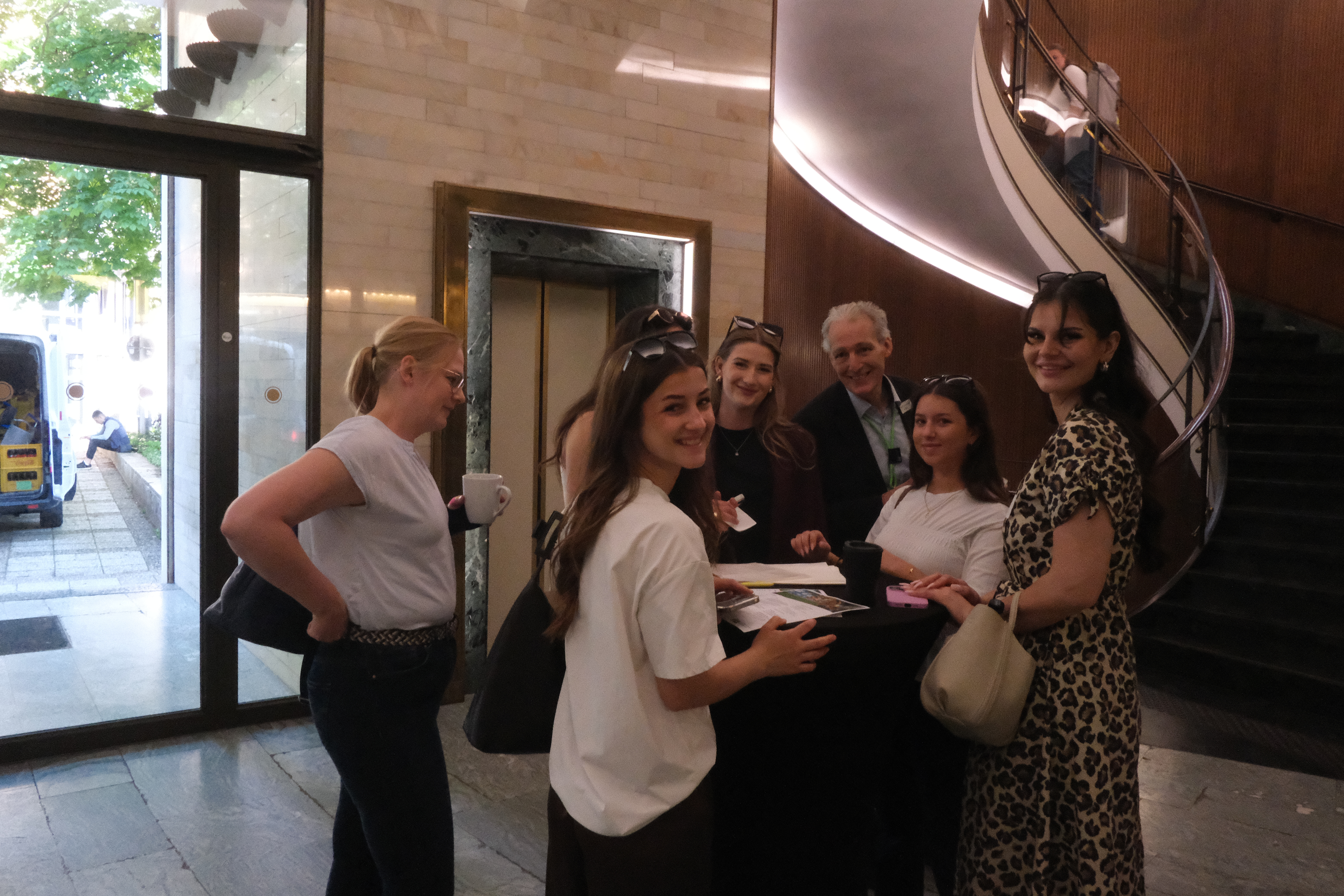
On May 22, 2026, the 3rd IU Students Symposium brought together researchers, healthcare professionals, students and industry partners at the magnificent Gerling-Quartier in Cologne — for a day that was far more than a conference. It was proof: student research deserves to be taken seriously. And the digitalisation of healthcare is no longer a topic for the future.
This article summarises the most important findings, theses and quotes of the day — from the opening keynote to the get-together with finger food. For everyone who was there. And for everyone who should have been.
Programme at a Glance
| Time | Agenda Item | Speaker |
|---|---|---|
| 09:30 | Arrival, Venetian Hall | – |
| 09:45 | Opening of the IU Students Symposium | Prof. Dr. Richard Geibel |
| 10:00 | Welcome by the Academic Site Director | Prof. Dr. Katja Grupp |
| 10:15 | Keynote: “Digitalisation of Healthcare” | Günter Wältermann, AOK Rheinland/Hamburg |
| 10:30 | Three parallel tracks: Business, Social Work, Health Management | Multiple speakers |
| 12:00 | Lunch break, snacks & drinks | Venetian Hall |
| 13:00 | Continuation of parallel tracks | Multiple speakers |
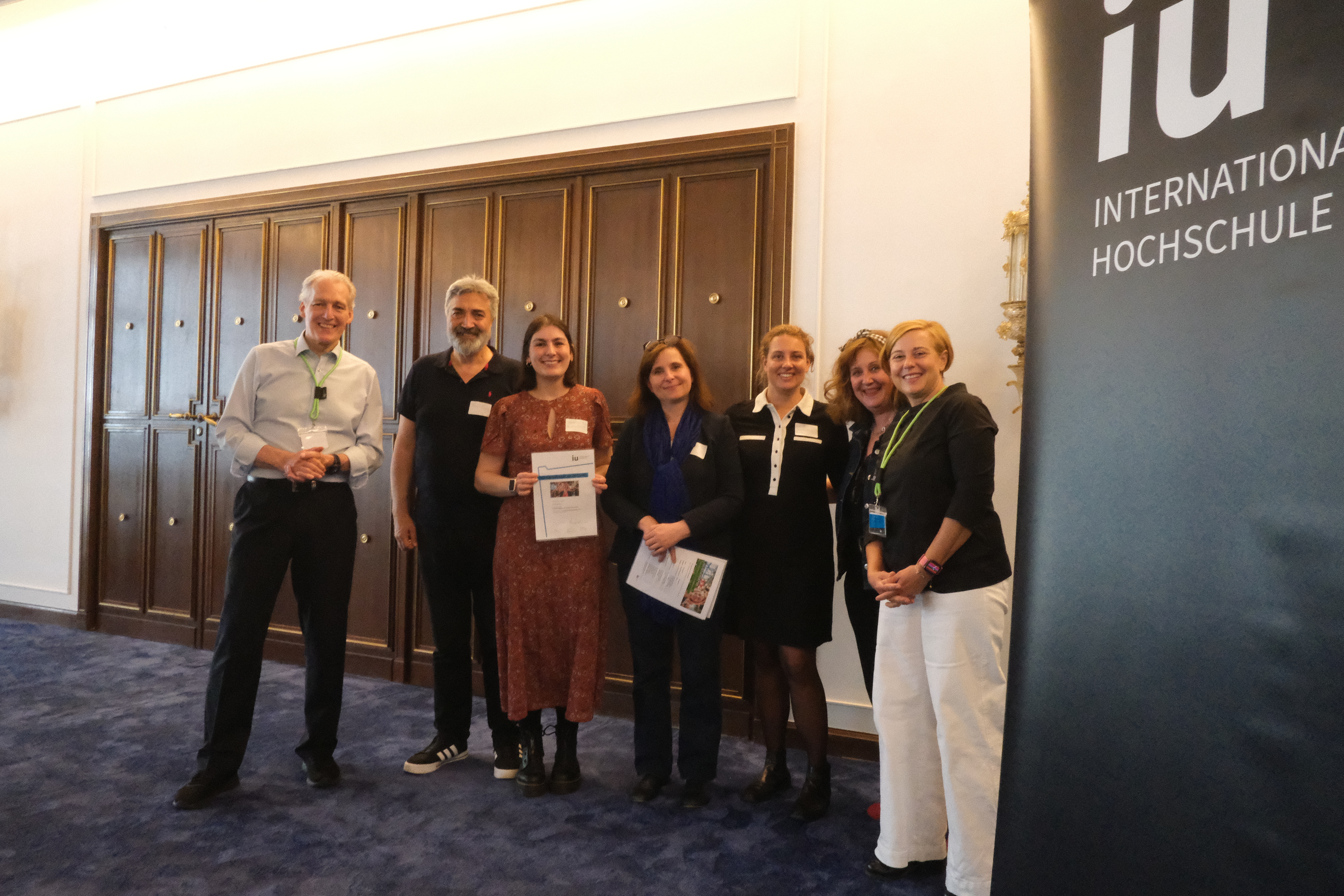
| 14:30 | Closing, certificates, outlook | Profs. Geibel, Grupp & Bozay |
| 15:00 | Get-together with finger food & drinks | All |
Opening: Numbers That Wake You Up
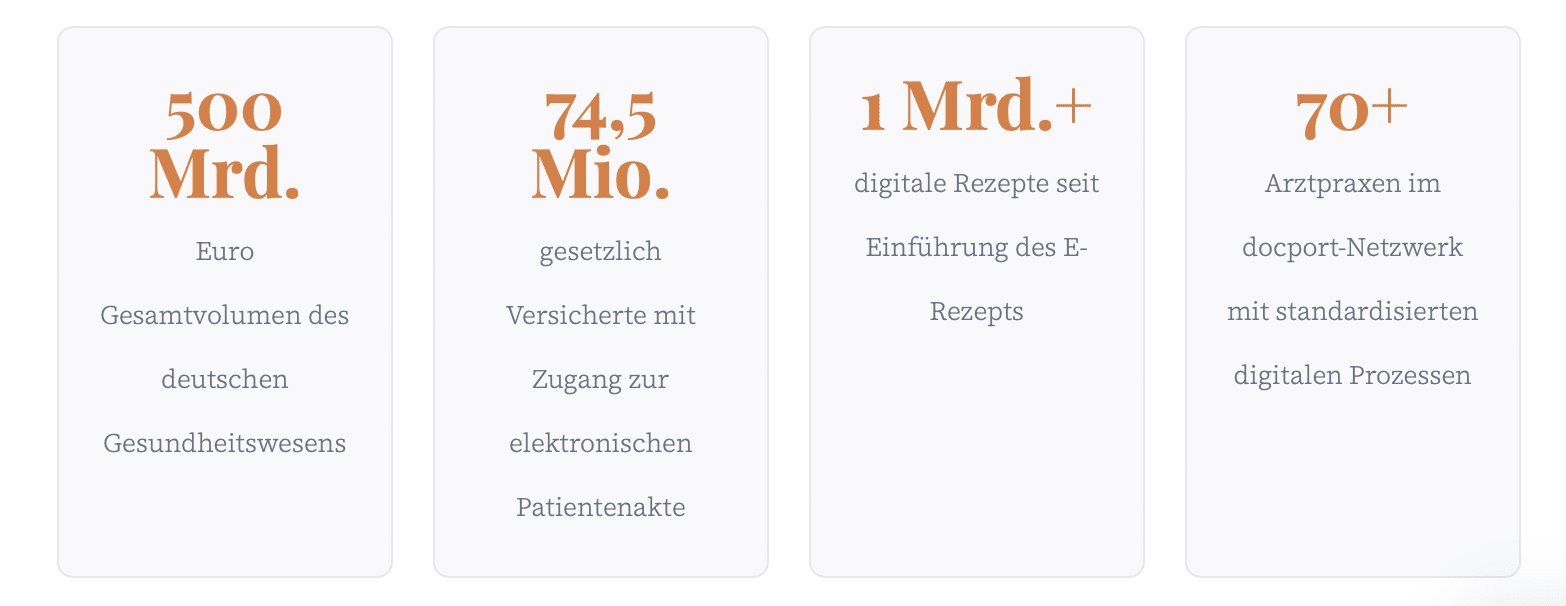
Prof. Dr. Richard Geibel opened the symposium by putting the sheer scale of the topic into perspective. Germany’s healthcare sector — with a volume of over €500 billion, roughly equivalent to the entire federal budget — is the country’s largest industry. And at the same time, one of the most profoundly affected by digitalisation.
State of Digitalisation in German Healthcare — May 2026
- All statutory health insurers have offered a health appsince 2024 — already used actively by 4.5 million insured persons
- The Electronic Patient Record (EPA)is available to 74.5 millionstatutory insured persons — over 20 million are already active users
- Since the launch of the e-prescription, more than 1 billion digital prescriptionshave been issued
- By end of 2027, 100% of referral letterswill be transmitted digitally between healthcare providers
“Digitalisation is taking hold in healthcare faster than many people think — and every single one of us is affected.”
– Prof. Dr. Richard Geibel, Opening of the 3rd IU Students Symposium
Keynote: Platform Strategy, Coordination and the Human at the Centre
Günter Wältermann is not only one of the most prominent figures in German statutory health insurance — he is also a shaper of change. As co-editor of the book “Digital Health in Germany”, he arrived with a thesis that set the tone for the entire day.
Wältermann highlighted his work on the platform strategy of statutory health insurers — and made clear that technology alone is not enough. The decisive question is not what is technically possible, but whether people will actually adopt the technology.
“Technology and practice are two very different spheres. What German healthcare is most lacking is coordination.”
– Günter Wältermann, AOK Rheinland/Hamburg
His conclusion: healthcare needs a hinge function — bridging new digital structures and existing care systems, theory and practice, what is possible and what actually reaches patients day to day.
National Digital Identity: Germany Falling Behind
Markus Leyck Dieken was for years the driving force behind Germany’s digital health infrastructure. His presentation was a wake-up call.
Germany is one of the EU’s largest economies — and has yet to provide a broad population with a functioning digital identity. Yet digital identity is not a bonus feature. It is the prerequisite for everything else: the EPA, digital services, a functioning digital health infrastructure.
Netherlands vs. Germany — A Sobering Comparison
In the Netherlands, a new digital identity infrastructure was rolled out within 24 hours. Citizens could register immediately and access government services on day one.
In Germany? Waiting times of at least three monthsfor basic administrative appointments. The digital identity is missing as a foundation — and without it, everything built on top of it stalls.
“Digital identity is not a technical question. It is the fundamental prerequisite for all digital services in healthcare — and beyond.”
– Dr. med. Markus Leyck Dieken
Digital Health Literacy: From 1986 to the Age of AI
Her presentation grew out of an IU Master’s thesis on health literacy — which is precisely the spirit of this symposium: student research becoming the foundation for real scientific contribution.
Prof. Dr. Brixius traced the evolution of health literacyacross four decades:
| Year | Milestone | Core statement |
|---|---|---|
| 1986 | WHO Definition | Health literacy = finding, understanding, assessing and applying health information. Goal: informed decisions, reduced inequality |
| 2000 | Three-level model (Nutbeam) | Functional, communicative and critical health literacy — developed in a US context |
| 2012 | European Health Literacy Survey | European model covering healthcare, disease prevention and health promotion. First measurable framework. |
| Today | AI & digital assistants | How does AI influence informed decision-making? Who controls what algorithms serve up as “health information”? |
“We can no longer think about health literacy in analogue terms alone. The question is: how does AI influence informed decision-making in healthcare — and who is responsible for that?”
– Prof. Dr. Klara Brixius, German Sport University Cologne
Digital Movement-Based Care: Many Offerings, No Common Foundation
Prof. Dr. Wollesen spoke twice during the day — and on both occasions her core finding was the same: the potential of digital exercise offerings is enormous. But the conceptual foundation is missing.
Her first presentation focused on the status quo of digital movement-based care in Germany. Her finding: COVID-19 has lastingly damaged exercise behaviour — in children and adults alike. Digital offerings could fill the gap. Could.
The Problem in Three Points
- Digital exercise offerings are already an established part of care— but without uniform quality criteria
- The effectiveness of identical offeringsvaries enormously between providers and contexts — no reliable framework for patients or healthcare providers
- Five to six different social security codesregulate cost reimbursement differently — in practice, pragmatic solutions emerge before policy catches up
“We need a cross-sector framework that clearly defines and measures the quality and effectiveness of digital exercise offerings. This is not an academic question — it is a question of patient safety.”
– Prof. Dr. Bettina Wollesen
AI and Mobile Health: From Smartphone to Personalised Medical Device
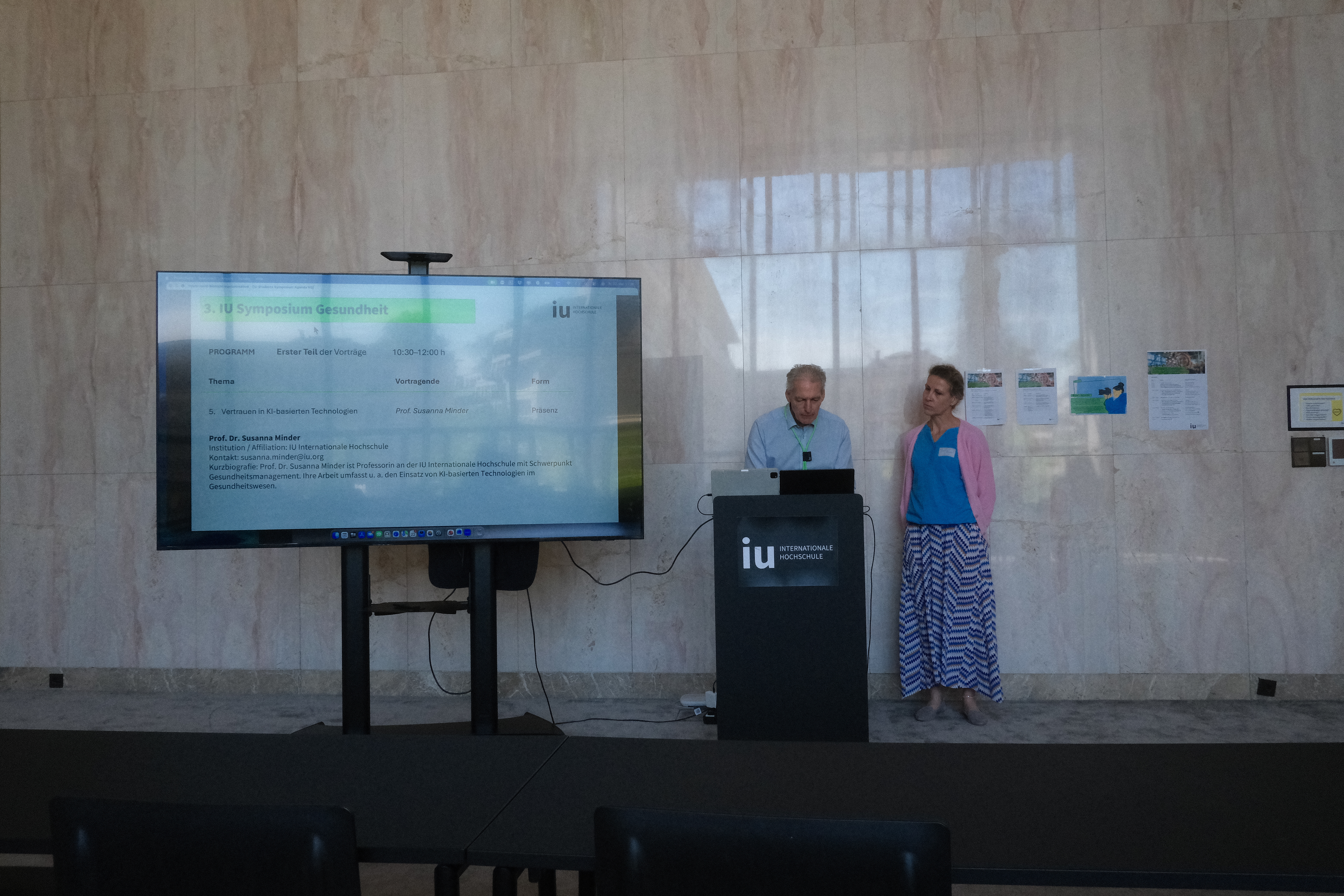
Prof. Dr. Minder opened her presentation with a provocative question to the audience: where does Germany rank in the global Digital Health Index? The answer: considerably lower than expected — and far below its potential.
AI in Mobile Health — Possibilities and Limits
- Wearables & smartwatches:Heart rate, sleep, movement, ECG data — all measurable, all analysable. The gold standard remains the sleep lab, but AI algorithms already enable meaningful prevention.
- Personalised therapy recommendations:AI structures vital data into individualised recommendations — subject to the validity of input data.
- Critical counter-question:How reliable and valid are AI-based recommendations in a clinical context? Who is liable when the algorithm is wrong?
- Neuroethics as an emerging field:How can monitoring data and AI algorithms be used in a reflective and ethically responsible way?
Digital GP Practice: “AI Is Not a Technology Question — It’s a Structural One”
Sami Gaber is not a theorist. He is a GP, a founder, and one of the few people in Germany actually living digital transformation in the day-to-day operations of over 70 medical practices.
His starting point: the number of GP practices is shrinking. Running a practice today is incomparably more complex than it was 20 years ago — billing, staff management, digitalisation, regulation, all on top of actually practising medicine.
What the docport “Practice as a Service” Model Actually Means
Local AI systems in practices identify patterns in diagnoses, medication plans and lab results — suggesting adjustments before the doctor notices them.
Structured data collection since 2017: vital data is systematically recorded and fed into a central AI system that continuously learns.
Medical assistants finally used properly: Away from filing paper, towards delegatable medical tasks with real clinical value — and more fulfilling jobs.
Rural care: The model has already helped municipalities facing the threat of losing their last GP — with remote support teams filling the gap.
“AI and IT are not a technology question — they are a structural question.”
– Dr. Sami Gaber, docport GmbH · from his chapter in “Digital Health in Germany”
A Blueprint for Digital Healthcare: The Patient as System Architecture
The joint presentation by Geibel and Arnold was the most substantial intellectual arc of the day: a systematic distillation of 25 expert contributions into a coherent blueprint for the digitalisation of German healthcare.
Four Clusters of the Blueprint
- Infrastructure:Telematics infrastructure, digital identity, interoperability — the foundation on which everything else is built
- Data:Electronic Patient Record, data spaces, data protection and security — the core of connected care
- Applications:Digital GP practice, digitalisation of nursing, oncology, mobile health — the visible surface of the system
- Governance & Patient-centricity:The benchmark against which everything must be measured
“The patient — together with their family — must be at the centre. Not as a footnote. As system architecture. Every stakeholder must align with that: providers, nursing, insurers, policymakers.”
– Prof. Dr. Richard Geibel & Dr. Ulrich Arnold
Exergames as Therapy: When Bowling Becomes Parkinson’s Treatment
In her second presentation of the day, Prof. Dr. Wollesen got concrete — and surprisingly playful.
Imagine a Parkinson’s patient playing bowling at home — without travelling to an alley. Together with others. With real therapeutic effect. This is not a future scenario. It is happening now.
What Makes Exergames Special
- Body tracking without devices:Just a camera and a screen. The algorithm adjusts the difficulty level in real time to the patient’s current physical capacity.
- Familiar game formats:Classic mobile games like Fruit Ninja transformed into exergames — low threshold, motivating, barrier-free.
- Patients as co-creators:Development happens with those affected, not just for them. Who else knows what actually works?
- Serious Games:Play meets learning — build health literacy through gameplay, navigate the healthcare system, experience prevention themes in action.
- Use cases:Rehabilitation, nursing, prevention, oncology, schools, community settings — the application cases are enormous.
“All you need for this system is a camera and a screen. Nothing more. The barrier is not the technology — it is the structure.”
– Prof. Dr. Bettina Wollesen
Springer Gabler: The 2nd Edition Is Coming
“The positive response to the first edition of ‘Digital Health in Germany’ impressively demonstrates how great the interest is in well-founded analysis and practice-oriented perspectives in this dynamic field. Formats like the IU Symposium Health make an important contribution by bringing together the discourse and generating new impulses for research and practice.”
– Margit Schlomski, Senior Editor, Springer Gabler | Health Care Management & Health Economics
Presentations from today’s symposium can serve as the basis for chapters in the 2nd edition of “Digital Health in Germany” — in German and English. Anyone interested in contributing should contact Prof. Dr. Richard Geibel or the E-Commerce Institut Cologne.
FAQ — Frequently Asked Questions About the IU Students Symposium Health
What is the IU Students Symposium Health?
The IU Students Symposium Health is a format of IU International University of Applied Sciences in Cologne that brings together students, researchers and healthcare practitioners. Students present their seminar, project and thesis work to a real expert audience — without the pressure of a traditional academic conference, but with genuine value for their CV and professional network.
Who can participate in the IU Students Symposium?
All IU students can participate as speakers or as audience members. Healthcare practitioners, graduates and interested professionals are also welcome. The symposium is hybrid — accessible in person in Cologne and via Zoom.
What do students gain from participating?
Speakers receive an official participation certificate, a speaker credit on a scientific symposium for their CV, the opportunity to contribute a chapter to the 2nd edition of “Digital Health in Germany”, and direct access to industry partners from the healthcare sector.
How can I contribute to the 2nd edition of “Digital Health in Germany”?
Anyone who has presented at the symposium or has scientifically addressed a topic in digital health is welcome to reach out to Prof. Dr. Richard Geibel or the E-Commerce Institut Cologne. Contributions are accepted in both German and English.
When will the next IU Students Symposium take place?
The 4th IU Students Symposium Health is planned for 2027. To be informed early, follow Prof. Dr. Richard Geibel on LinkedIn or subscribe to the E-Commerce Institut Cologne newsletter.
Conclusion: A Day That Leaves a Mark
The 3rd IU Students Symposium Health was more than a specialist event. It was proof that student research can — and must — be taken seriously. And that the digitalisation of healthcare is not an abstract future topic. It is happening today.
From digital identity to exergames for Parkinson’s patients, from AI in GP practices to a blueprint for the entire system: the day’s themes showed how many challenges remain open — and how many people are already working on solutions.
“Today we wanted from YOU an inspiring and joyful get-together. Exchange ideas across semesters and programmes. Show YOUR academic work. Learn from each other.”
– Prof. Dr. Katja Grupp, Academic Site Director, IU Campus Cologne
See you next year. 👏