Digital Health in Germany: Key Insights from the Press Conference on the New Springer Publication
On December 3rd at 4:30 p.m., the official press conference for the launch of the book Digital Health in Germany took place — a joint initiative of the AOK Rheinland/Hamburg, the editorial team led by Prof. Dr. Richard Geibel (E-Commerce Institute Cologne) and Dr. Ulrich Arnold, and the Springer publishing house.
The publication has already attracted strong interest:
👉 https://link.springer.com/book/10.1007/978-3-658-47498-0
Within just a few days, the number of online visits to the book page grew from 11,000 to more than 15,000 — a clear sign of how relevant the topic of digital health has become in Germany.
Explore related research topics at the E-Commerce Institute.
Journalists Call for Review Copies and Press Material
The press conference opened with a direct request from the attending media. One journalist asked:
“Is there a review copy of the book? Any press material with at least an overview or summary?”
The organizing team responded immediately:
“We are happy to send the flyer, the executive summary, and of course review copies.”
It was also agreed that a list of authors available for interviews would be provided afterward. Demonstrating the editorial team’s commitment to transparency and dialogue.
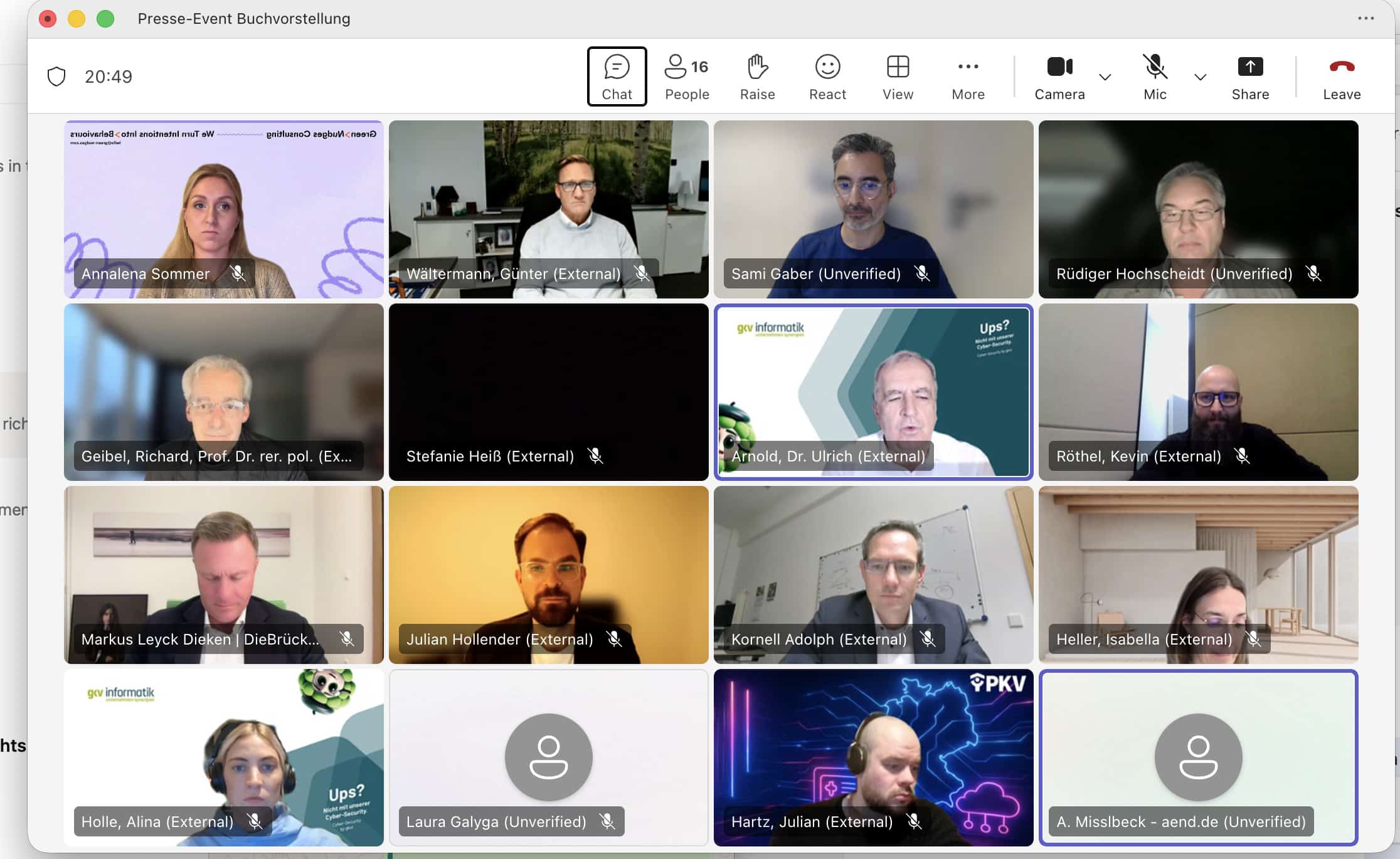
AOK: Digitalisation as a “Game Changer” for Healthcare
In his opening remarks, Günter Wältermann, Chairman of the Board at AOK Rheinland/Hamburg, emphasized the transformative power of digitalisation:
“Digitalisation will be a game changer — an enabler for topics that we previously could not move.”
He praised the comprehensiveness of the book:
“This book shows, very impressively, the opportunities of digitalisation in healthcare, particularly where it is already working well in practice.”
He referred to current legislation in emergency care, digital documentation and patient services — pointing out that these topics are now developing at remarkable speed.
A Practitioner’s Perspective: Digitalisation in Daily Medical Work
A compelling part of the conference came from a general practitioner with over 20 years of experience, who also founded a digital health company:
“In the last five or six years, an enormous amount has happened.”
He described how digitalisation — once invisible to patients — now becomes increasingly tangible through online appointment booking, structured documentation, and digital visit summaries.
Most importantly, he emphasized the value of structured data:
“If we structure data properly, we can work with it in completely new ways. AI will help us make faster and better decisions for our patients.”
He also spoke about a newly formed network of 50 participating practices, which standardizes technological processes:
“When you solve problems in one practice, you’ve solved them for all — freeing doctors to focus on patients rather than technical integration.”
Digital Identity as a Key Enabler
A systemic perspective was contributed by Dr. Markus Degenhardt, former CEO of gematik. He reminded attendees how the early telematics infrastructure emerged — in part from the need to better track medication side effects.
He stressed:
“Germany will not be able to avoid introducing a widely usable digital identity. Without it, we cannot achieve a fluid digital dialogue.”
He highlighted that only around 8% of the German population currently use the electronic ID (eID) — largely due to usability issues.
His message was clear: transformative digital health requires accessible, secure and widely adopted identification systems.
Who Is Driving Digitalisation in Healthcare?
Another essential perspective came from Rüdiger Hochschild, who contributed a chapter mapping the many stakeholders in Germany’s healthcare digitalisation efforts.
“More than 100 organizations are involved in shaping digitalisation.”
His chapter provides a structured view of healthcare actors — from providers and insurers to industry and regulatory bodies — helping readers understand roles, relationships and complexity.
He also analyzed digital systems in the outpatient and hospital sectors, from primary care software to telemedicine and robotics.
Conclusion: Combining the Digital and the Social
To close the conference, Prof. Geibel emphasized the human aspect of digital change:
“We remain social beings. We enjoy exchange and connection. Digitalisation can help make all these areas function better.”
His final message reflects the spirit of the book: digital health in Germany is not just a technological project. It is a societal transformation requiring collaboration across institutions, practitioners, policymakers and citizens.