AI in Sales: How Intelligent Sales Apps Are Transforming Retail
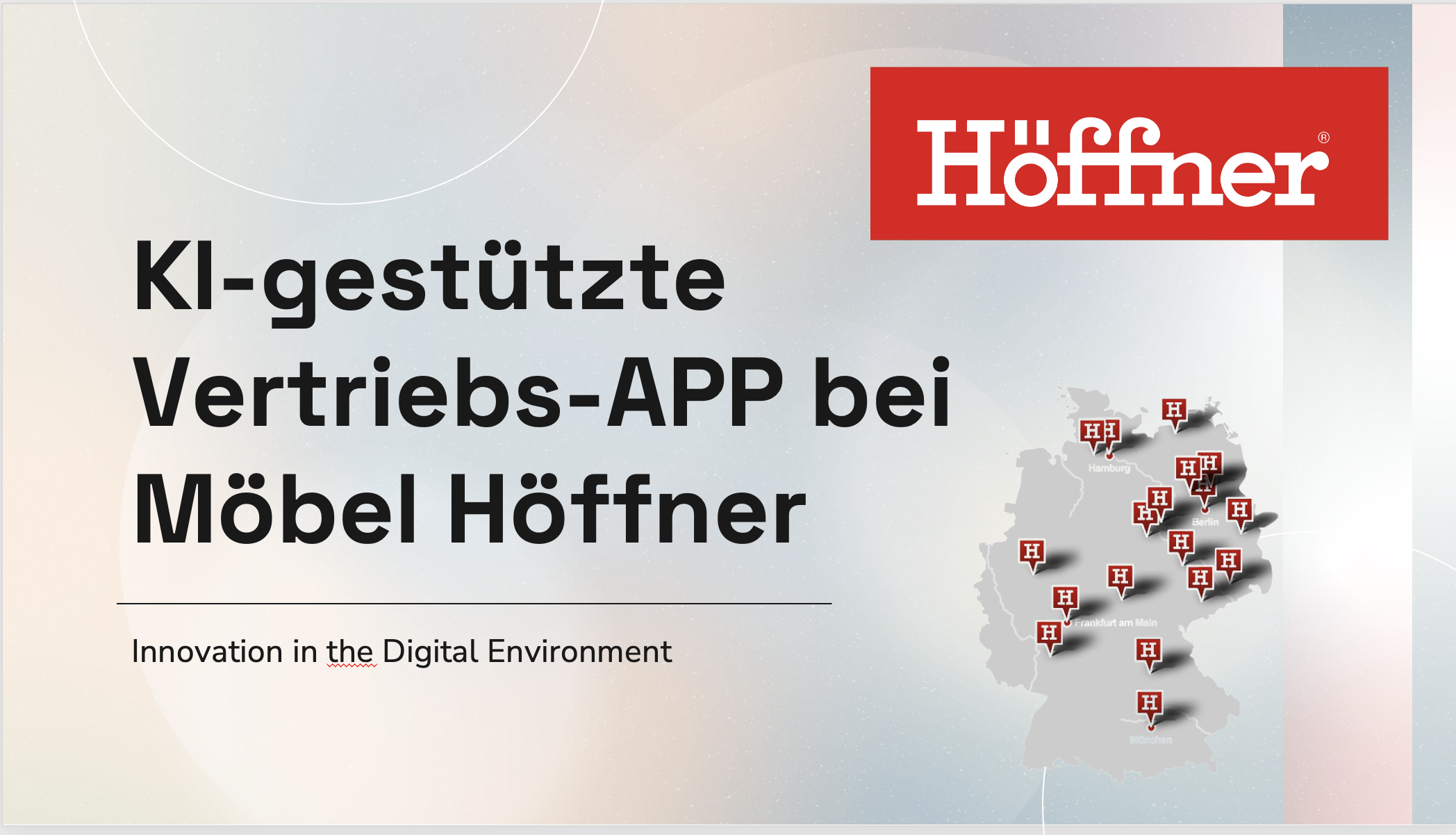
Artificial Intelligence (AI) is reshaping sales processes across industries. Especially in retail, AI-powered sales applications enable more efficient workflows, personalized customer experiences, and data-driven decision-making. A project concept developed for Möbel Höffner illustrates how digital innovation can enhance field sales through AI, AR, and CRM integration.
Project Concept: An AI-Powered Sales App
The project focuses on developing an intelligent sales app designed to support field sales representatives during customer interactions. Core technologies include:
-
Speech and image recognition
-
Augmented Reality (AR) for room planning
-
Automated CRM interfaces
-
AI-driven product recommendations
The goal is to optimize the entire sales process directly at the customer’s location.
Project Objectives and Performance Measurement
Operational Efficiency
Manual tasks such as data entry and documentation are automated, reducing errors and saving time.
Evaluation and KPIs
Success is measured through:
-
Before-and-after performance comparisons
-
Pilot testing in five stores
-
CRM data analysis
-
Employee and customer surveys
Key Benefits of AI Sales Applications
Internal Operational Benefits
-
Faster quotation processes
-
Automated CRM documentation
-
Reduced error rates through AI assistance
Strategic Business Benefits
-
Improved sales control
-
Data-driven decision-making
-
Real-time inventory and sales transparency
Customer Benefits
-
Personalized product recommendations
-
AR-based room visualization
-
Higher satisfaction through tailored consultation
Stakeholders and Project Structure
Key stakeholders include management, sales teams, IT departments, external technology partners, and customers. Close collaboration between sales and IT is essential for successful implementation.
Risks and Challenges
Despite its potential, the project faces several challenges:
-
Technological complexity of AI, AR, and CRM integration
-
Data privacy and compliance (GDPR requirements)
-
Change management and employee adoption
-
Return on investment, depending on rollout and usage
Future Outlook: AI in Retail Sales
AI-powered sales apps represent a major step toward smart retail environments. As AI and AR technologies mature, personalized consulting and automated sales processes will become standard in retail sales strategies.
Conclusion
The AI-based sales app for Möbel Höffner demonstrates how digital sales innovation can enhance efficiency, customer experience, and competitiveness. Long-term success depends on strategic implementation, employee engagement, and regulatory compliance.
About the Authors
This article is based on an academic project in the field of Innovation in the Digital Environment, focusing on AI-driven sales solutions and digital transformation in retail.