Social Commerce with Pinterest: How Visual Inspiration Drives E-Commerce
Social commerce has evolved into one of the most dynamic growth areas within digital retail. By combining social media interactions with integrated shopping features, platforms enable users to discover, evaluate, and purchase products in a more intuitive and inspiration-driven way. Among these platforms, Pinterest stands out due to its strong focus on visual discovery, planning, and intent-based usage rather than pure entertainment.
Unlike traditional social networks, Pinterest is primarily used to search for ideas, save inspiration, and plan future purchases. This unique positioning makes Pinterest a highly relevant platform for brands and retailers aiming to influence customers early in the decision-making process and guide them smoothly toward conversion.
Social Commerce: Where Inspiration Meets Transaction
Social commerce represents the convergence of social media and e-commerce. Instead of starting with a concrete purchase intention, users often begin with inspiration. Visual content sparks interest, builds desire, and gradually leads toward buying decisions.
The global social commerce market has grown significantly in recent years. This demonstrates that consumers increasingly accept social platforms as part of their shopping journey. Pinterest plays a central role in this development by offering a structured, interest-based environment that supports product discovery in a non-intrusive way.
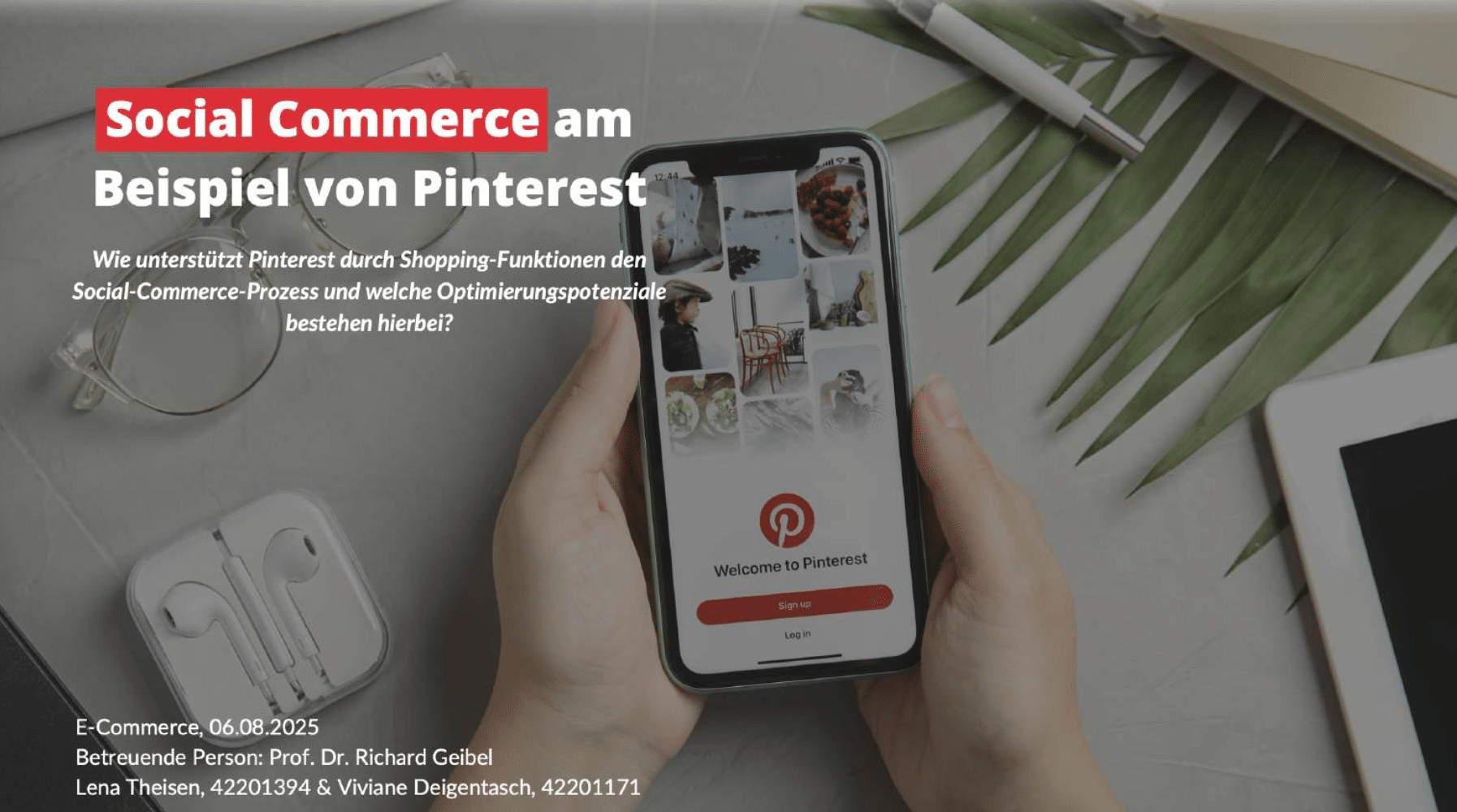
Pinterest as a Social Commerce Platform
Founded in 2010, Pinterest operates as a visual search engine and social network where users collect and organize images, videos, and links on digital boards. The platform combines inspiration and product discovery, making it especially attractive for categories such as home décor, fashion, lifestyle, beauty, and DIY.
With hundreds of millions of active users worldwide and a strong focus on inspiration-driven usage, Pinterest creates an environment where users are already mentally prepared to explore new ideas and products. Advertising and shopping content is seamlessly integrated into the feed, making commercial content feel organic rather than disruptive.
Shopping Features That Support the Social Commerce Process
Pinterest offers several shopping-related features that enable a smooth transition from inspiration to purchase.
Shoppable Pins allow products to be displayed with price, availability, and direct links to online shops. Retailers can upload their product catalogs, which Pinterest then automatically converts into purchasable pins. This significantly shortens the customer journey by reducing the number of steps between discovery and checkout.
Pinterest Lens takes this one step further by enabling visual search. Users can upload or photograph an object, and Pinterest identifies similar products and links them directly to shopping options. This feature removes the need for text-based searches and supports spontaneous purchase decisions.
In addition, Pinterest Ads enable targeted promotion based on user interests and behavior. Pins can also link directly to external online shops, positioning Pinterest as an effective traffic driver rather than a closed shopping ecosystem.
A User-Centered Customer Journey
Pinterest supports users throughout the entire customer journey. Visual content generates awareness, saved pins signal interest, shoppable content supports consideration, and external links lead to purchase decisions. Even after the purchase, the platform continues to inspire users with new recommendations, encouraging repeat engagement and future purchases.
This continuous inspiration loop is one of Pinterest’s strongest advantages in social commerce, as it keeps brands present beyond a single transaction.
The Core Challenge: High Inspiration, Low Conversion
Despite its strong inspirational power, Pinterest still faces challenges when it comes to conversion. Many users view the platform primarily as a source of ideas rather than a place to complete purchases. As a result, products are often discovered on Pinterest. However, bought later via other channels such as marketplaces or search engines.
Key reasons for this include limited price comparison options, missing product reviews, and low awareness of Pinterest’s shopping features. This gap between inspiration and conversion represents both a challenge and an opportunity for the platform and for brands using it.
Opportunities to Unlock More Social Commerce Potential
To increase conversion rates and strengthen its position as a shopping platform, Pinterest could further develop its commerce features. Possible improvements include integrated price comparison tools, user-generated reviews, a stronger in-app checkout experience, and exclusive incentives such as discounts or bonus programs.
For retailers, this highlights the importance of optimizing Pinterest content not only for inspiration but also for clarity, trust, and conversion readiness.
Conclusion: Pinterest as a Strategic Social Commerce Channel
Pinterest demonstrates how social commerce can successfully combine inspiration, discovery, and shopping. With its unique user mindset and visual focus, the platform offers significant opportunities for brands to influence purchasing decisions early and sustainably.
By addressing existing conversion barriers and further enhancing shopping features, Pinterest has the potential to become an even more powerful driver of e-commerce growth. For retailers, Pinterest is already a valuable channel for visibility, brand building, and qualified traffic. Further, its role in social commerce will continue to grow.